

Impact of the COVID-19 pandemic on sports and exercise
Updated: 2026-01-29
Start here
New to Mana Rush? Start with the guide that fits your goal
If you are comparing coffee alternatives, natural energy powder, and smoother caffeine routines, these are the best next steps.
Asia-Pacific Journal of Sports Medicine, Arthroscopy, Rehabilitation and Technology
Volume 22, October 2020, Pages 39-44

Original Article
Impact of the COVID-19 pandemic on sports and exercise
Under a Creative Commons license
open access
Keywords
COVID-19
Pandemic
Sports Medicine
Infection
Immunity
Exercise
Guarana
Introduction
The coronavirus disease 19 (COVID-19) was first identified in December 2019 in China and caused clusters of respiratory illnesses.1 The highly transmittable viral infection is caused by the virus known as the severe acute respiratory syndrome coronavirus 2 (SARS-CoV2), which genomic analysis revealed that it is genetically related to the SARS outbreak2 that infected 8098 individuals across 26 countries.3 In the span of three months, the World Health Organization has declared the COVID-19 as a pandemic on March 11, 2020.4 The number of cases and affected countries is still rapidly increasing with over 6 million confirmed cases in 216 countries across the entire world5 until the date of this writing. This shows that the transmission rate of COVID-19 is much higher than the SARS outbreak almost two decades ago and has caused the majority of sporting events to be suspended and/or postponed. The Union of European Football Associations (UEFA) formally decided to postpone the top tier UEFA Champions League Final and other games on March 23, 2020, until further notice, as news of professional athletes were tested positive.6 The International Olympic Committee (IOC), along with the Japanese government, announced on 30 March 2020 that the 2020 Tokyo Olympics will be rescheduled to July 2021, whilst keeping the name of 2020 Tokyo Olympics.7
COVID-19 – transmission and clinical characteristics
The first cases of COVID-19 before January 2020 were linked to the Huanan Seafood Wholesale Market and zoonotic (animal-to-human) transmission was believed to be the main mechanism. The emergence of the virus coincided with the Chinese Lunar New Year Holiday, in which a large human migration of 5 million people took place as city workers travelled back to their hometowns. From the currently available data available to this date, the main mode of human-to-human transmission occurs through close contact with an infected individual and exposed to droplets or aerosols. When the infected individual is coughing or sneezing, these aerosols are believed to enter the lungs via inhalation through the mouth or nose.3 The virus was detectable in stool samples despite the course of illness, even after the virus was no longer detected in respiratory samples.8 The contaminated environment may cause transmission through contact with mucosal membranes, such as the eyes, mouth, and nose.9 Studies have also shown that the virus is viable up to hours as aerosols and days on surfaces.10
The average median incubation period was estimated to be around 5 days, majority of those who will develop symptoms will do so within 11.5 days, and approximately 1% will develop symptoms after 14 days.11 The estimated R0 was approximately 2.2, which means that on average an infected person will transmit the virus to approximately 2 other individuals.12
The most common symptoms were fever (43.8% on admission and 88.7% during hospitalization) and cough (67.8%).13 Infected people were often asymptomatic and did not present with a fever, which will impose a challenging situation in terms of developing a surveillance method for sporting events. The viral load detected in symptomatic and asymptomatic patients were of similar levels and the viral nucleic acid shedding pattern of infected individuals was more similar to influenza rather than SARS in 2003, implying that asymptomatic infected individuals are as infectious as those that are showing symptoms.14 This further differentiates why SARS was an epidemic and COVID-19 is a pandemic, suggesting that infection control measures and protocols developed for SARS may not apply to the current COVID-19 pandemic.
Preventive measures
WHO recommends countries to actively combat the disease through critical preparedness, readiness, and response actions according to the “Strategic Preparedness and Response Plan for COVID-19” and their corresponding “WHO defined transmission scenario”.15
Recommendations include measures to control local spread by raising public awareness, promotion of personal hygiene, and postponement or cancellation of large-scale public gatherings. In the situation of identifying positive cases, they should implement case and contact finding through containment to delay surges of infected individuals.16 Sporting events could be considered a large-scale public event, whether-or-not a spectating crowd is present. If sporting competitions are to be resumed, the goal is to minimize the number of people congregated at one single place and time through closed competitions with no spectators and minimizing nonessential personnel present at the venue, such as by cancelling press conferences and interviews.
Sporting equipment should be cleaned as frequently as possible as SARS-CoV 2 was found to last longer on surfaces such as plastic and stainless steel up to 72 h. A dilution of 1:50 of standard bleach for large settings and 70% ethanol is recommended for smaller surfaces.17
Immunity and sports
Although moderate-levels of exercise can boost overall immunity.18, 19, 20, 21 Intensive and prolonged physical exertion has been linked with an ‘open-window’ of impaired immunity up to 72 h after the exercise.22, 23, 24 Common infections for athletes mostly comprises of dermatological related infections (especially in contact sports),25 upper respiratory tract infections, and gastrointestinal infections. The coronavirus is a respiratory pathogen and previous studies have shown that the risk of upper respiratory tract infections was almost six times more likely in endurance races.19,26,27 The underlying mechanism is not fully understood, although most studies suggest exercise significantly influences acquired immunity while evidence about the role of exercise on innate immunity is less conclusive. As the virus was also found in stool samples,8 contaminated environments, such as soil, may pose a threat to outdoor sporting events. There are still unknowns regarding the relationship of immunity and sports, therefore experts are still researching on the role of psychological factors (especially during competitions) as one of the large knowledge gaps.21
Regarding the topic of infection control during a global pandemic, our focus is not whether these infections hamper athletic performance; but lies in the assessment of the risk of a player getting infected if they participate in sports and measure on how to reduce the rate/risk of transmission. Our experience in the local top-tier league will illustrate the measures that were taken and the rationale behind them.
Experience in the professional football league
Hong Kong Premier League (HKPL) is the top-division professional football league in Hong Kong with 10 teams competing. Unlike other Asian football leagues which start their season in February or March, HKPL starts in August or September. This made HKPL the first professional football league in the world to be suspended on January 28, 202028, as a result of COVID-19 outbreak in Asia.
Two weeks later, although the official government policy was still unclear, the Hong Kong Football Association (HKFA) decided to resume its annual cup competition.29 Sixteen cup matches were held behind closed doors in the HKFA training centre from February 11–29.
With the support from the Hong Kong Government, HKPL regular league matches were resumed on March 7 behind closed doors in Tseung Kwan O Sports Ground (TKOSG), which is a certified stadium for professional football matches.30 There were a number of new measures for protection against COVID-19 transmission. Firstly, the number of personnel in the stadium was limited to 180. All personnel were required to submit health declaration forms on arrival, followed by measuring body temperature and using sanitizing alcohol. Meeting rooms were arranged for teams to have pre-game, half-time, and post-game briefings instead of in the changing room. A maximum of 9 players was allowed to use the changing room at the same time to decrease the chance of close contact and players were not allowed to shower after games as shower water and aerosolized shower mist are a potential medium of infection.31 Furthermore, all players and staffs had to wear a surgical mask if not playing And pre-game handshaking were discouraged.
With these strict infection control measures, 10 league and cup matches were held till March 23, in which HKFA decided to stop the competition again due to a rapid surge of imported COVID-19 cases in Hong Kong.32 Unfortunately, a staff of the HKPL team had been confirmed to have COVID-19 infection on March 31, after his spouse was confirmed to be infected on March 29.33 There has not been anymore reported cases in the HKPL till the date of this writing. The timeline and trend of HKPL during the COVID-19 outbreak in Hong Kong can be seen in Table 1 and Fig. 1.34
Table 1. Timeline of the HKPL with confirmed cases in Hong Kong.
| Timeline | Major event in HKPL | Number of confirmed COVID-19 cases in Hong Kong |
|---|---|---|
| January 1, 2020 | HKFA Suspend all competition FTC open for team training |
8 |
| February 2, 2020 | HKFA re-open competition at FTC FTC open for team training |
24 |
| March 3, 2020 | HKFA Continue competition at TKOSG FTC open for team training |
100 |
| March 23, 2020 | HKFA Suspend all competition FTC closed |
351 |
| March 31, 2020 | First confirmed COVID-19 case | 680 |

Fig. 1. Status of the HKPL during the COVID-19 outbreak in Hong Kong.
The risk of virus transmission during football games
Avoiding contact and good personal hygiene are key to prevent infection transmission. However, bodily contact is inevitable in football training and competitions. In addition, infection-risky behaviours, such as spitting and touching the face, are not uncommon during football games.
To quantify these transmission-risky behaviours, we obtained video footage of 4 male professional football players with dedicated cameras for an entire match. We tracked their time of close body contact (defined as an inter-personal distance of less than 1.5 m) and frequency of infection-risky behaviours (touching the mouth, touching the eyes, touching the nose, and spitting). The results are summarized in Table 2.
Table 2. Results of experiment on the risk of virus transmission during football games.
| Player 1 | Player 2 | Player 3 | Player 4 | Mean | |
|---|---|---|---|---|---|
| Position | Forward | Mid-fielder | Forward | Forward | – |
| Close contact (Minutes per 90 min) | 5.9 | 35.5 | 18.4 | 17.5 | 19.3 |
| Touching mouth (Episode per 90 min) | 37 | 2 | 6 | 8 | 13 |
| Touching eyes (Episode per 90 min) | 8 | 0 | 0 | 6 | 4 |
| Touching nose (Episode per 90 min) | 37 | 0 | 11 | 8 | 14 |
| Spitting (Episode per 90 min) | 27 | 2 | 42 | 15 | 22 |
The mean close-contact time for each footballer was 19.3 min per 90 min (Range 5.9–35.5). Although this may seem less than other close-contact sports such as those with smaller courts or close combat sports, infection-risky behaviours were indeed observed in football players. There was an average of 52 episodes of infection-risky behaviours per 90 min of professional football. This reaffirms that playing football certainly poses an infection transmission risk.
Investigation on the effects of exercising with a facemask
In order to maintain physical activity during the COVID-19 control period, many families avoided the crowded city centres and opted to travel to the countryside for a leisurely walk or hike during the weekends. This issue of wearing facemasks during outdoor activities became a topic of interest. The objective of this experiment was to investigate the effects of a facemask during exercise.
This was a controlled laboratory, within-subject, repeated measures study of 23 healthy volunteers of various sporting backgrounds. The participants underwent graded treadmill (10% slope) walking at 4 km per hour for 6 min with the intention of simulating outdoor recreational hiking on an uphill slope at a comfortable pace.35 Heart rate (HR) was continuously monitored using a chest strap (Polar H10) and rate of perceived exertion was charted minute by minute. The rate of perceived exertion (RPE) rating is based on a 6 to 20 rating scale which was measured at rest and also the end of each minute interval with a total of 6 min. All participants repeated the test with and without wearing a surgical mask (in a randomized order); sufficient rest was given between trials. Informed consent was obtained from all participants prior to the testing.
Twenty-three participants (10 males, 13 females) with a mean age of 33.8 (range 21–60) were recruited (Table 3). Paired t-test showed significant (P < 0.01) differences among the heart rate and RPE between wearing a mask and without a mask, as shown in Table 4. The present finding demonstrated that both heart rate and RPE were significantly increased with wearing of facemasks during graded leisure walking.
Table 3. Physical characteristics of the subjects.
| Characteristics | Male n=10 | Female n=13 | ||||
|---|---|---|---|---|---|---|
| Mean | SD | Range | Mean | SD | Range | |
| Age | 35.1 | 12.7 | 21–60 | 32.7 | 9.9 | 23–59 |
| Weight (kg) | 72.2 | 7.7 | 60–86 | 51.8 | 7.3 | 41–67 |
| Height (cm) | 175.6 | 4.1 | 169–183 | 159.7 | 8.2 | 139–175 |
| BMI | 23.4 | 2.3 | 19.6–26.8 | 20.1 | 1.6 | 17.7–22.7 |
Table 4. Repeated measure t-test showed the heart rate responses (HR) and rate of perceived exertion (RPE) during 6-min graded (10%) treadmill walking between wearing masks and without masks.
| Time | Heart rates | Rate of perceived exertions | ||
|---|---|---|---|---|
| Without Masks | With Masks | Without Masks | With Masks | |
| At rest | 73.9 ± 9.8 | 74.5 ± 10.0 | 6.6 ± 1.0 | 6.9 ± 1.2 |
| 1 min | 113.0 ± 10.2∗ | 115.9 ± 8.9∗ | 8.4 ± 1.7 | 9.0 ± 1.8 |
| 2 min | 120.1 ± 11.0∗ | 123.1 ± 11.4∗ | 9.3 ± 2.0 | 10.4 ± 2.1 |
| 3 min | 120.3 ± 11.0∗ | 124.5 ± 11.8∗ | 9.8 ± 2.0∗ | 11.4 ± 2.0∗ |
| 4 min | 122.0 ± 12.2∗ | 125.8 ± 13.2∗ | 10.2 ± 2.0∗ | 12.2 ± 2.0∗ |
| 5 min | 123.4 ± 12.3∗ | 127.6 ± 12.6∗ | 10.7 ± 2.0∗ | 12.5 ± 2.1∗ |
| 6 min | 124.4 ± 12.8∗ | 128.4 ± 13.2∗ | 10.8 ± 2.2∗ | 12.7 ± 2.1∗ |
∗significant differences at 0.01 level.
Based on this pilot data, we believe that exercising with facemasks at a submaximal level induces higher physiological responses possibly due to restricted ventilation, heavier breathing, and sympathetic responses.36,37 Comparing with subjects who did not wear masks (RPE = 10.8 vs 12.7 at 6th min), subjects wearing masks reported subjectively higher physiological demands. A RPE = 12.7 refers to moderate-intensity activity according to the Borg Scale level of “somewhat hard”. Some volunteers reported having an uncomfortable feeling of dyspnoea during the assessment with facemasks on, which was in line with previous studies.38 Skin irritation and accumulation of moisture inside the masks also negatively impacts respiratory and dermal mechanisms of human thermoregulation through impairment of convection, evaporation, and radiation processes.
With the increased cardio-respiratory burden following masked exercise, it is important to stay within safe limits. This is especially true for more mature hikers and those with multiple comorbidities; in general, it will be wise to rest when the heart rate exceeds 150 beats per minute39 and/or 70% of age-predicted maximum heart rate. Masked exercises increase physiological demands, therefore activities should be adjusted according to the individual’s ability.
Elite sports training in Hong Kong
As the only elite training centre in Hong Kong, the Hong Kong Sports Institute (HKSI) has implemented policies in accordance with the pre-determined guidelines related to infection outbreak since early January 2020. These policies emphasize the importance of personal hygiene, the establishment of a reporting system and the prevention of the COVID-19 risk to HKSI to maintain the elite training especially for the Olympic Games/Paralympic Games athletes. From the lesson of the 2003 SARS epidemic in HK, HKSI has well-studied related preventive measures40 and drafted corresponding guidelines against different levels of an outbreak which were working alone with updating guidelines from the Department of Health, HKSAR.
Since the launch of the “Preparedness and Response Plan for Novel Infectious Disease of Public Health Significance” and activation of the “Serious Response Level” by HKSAR Government on January 4, HKSI has followed the pre-determined guidelines to clarify the details of precaution measures. Therefore, HKSI was able to take swift measures to respond to the current epidemic situation within a few days. In addition, HKSI issued weekly updates to remind all personnel on personal and maintaining physical distance between individuals during and after training. Relevant health education and psychology supporting materials were provided to strengthen the importance of personal hygiene in HKSI premises and manage pressures that may be encountered when athletes train and compete overseas, respectively. Concomitantly, the cleaning and disinfection of facilities were further enhanced.
As the gravity of the COVID-19 outbreak unfolded with confirmed human-to-human outbreaks in Hong Kong, HKSI escalated the response level to “Emergency” and “Urgent” on January 25 and March 18, respectively. All personnel were required to measure body temperature and declare FTOCC (Fever, Travel, Occupation, Contact and Clustering) status before entering the institute and the daily body temperature report of all athletes were obtained. Upon the issuance of Government “Red Outbound Travel Alert”, all personnel returning to Hong Kong after March 5 from overseas must report their temperature and symptoms (if any) electronically for 14 days and optional COVID-19 tests were provided.
All junior-level and part-time training were suspended and only full-time and Olympic Games/Paralympic Games training continued starting on January 28. A work-from-home roster and flexible office hours have also been implemented for administrative staff, and they were instructed not to have direct contact with athletes. The HKSI strictly abided-by the government’s policy on inbound travellers, all activities to Mainland China and mass activities in HKSI were suspended from February 8 onward. All personnel returning from COVID-19 affected areas (even if not included the governments’ compulsory quarantine regions) were required to self-isolate at home or a hotel for 14 days before returning to HKSI. All travel to the affected areas were disallowed during the corresponding period. On March 25, 80 athletes (Olympic Games/Paralympic Games), 30 coaches, and 20 supporting staffs were present at HKSI to maintain training and related operations at the institute during this lockdown environment. The institute strives to support elite training while preventing an outbreak through proper planning and timely implementation of multiple policies.
As the number of confirmed cases in Hong Kong plateaued and no locally acquired cases were reported from April 21 for 17 days, all full-time senior and junior athletes along with part-time athletes of only Olympic Games and Paralympic Games squads of HKSI gradually resumed their training on May 8 with strict infection control measures as mentioned above. Local schools were allowed to open by phases from May 27, therefore all other junior and part-time athletes were allowed to resume their training and HKSI was completely reverted back to normal training.
Conclusion
The final impact of the COVID-19 pandemic on sports and exercise cannot be determined at this stage, however, the information that we gathered may provide valuable guidance to athletes and governing committees to move forward safely. COVID-19 is highly transmittable in sporting environments due to its viability, long incubation period, and milder symptoms; especially in contact sports. The essential preventive measures include minimizing human-to-human contact and practising proper personal hygiene. Athletes’ on-field own risky behaviours should be avoided to minimize unnecessary infection as close contact with others is unavoidable during contact sports. The decision to resume sporting events should correlate to the local number of cases and strict infection measures will need to be implemented at the early phases of resumption. Exercise with a facemask definitely has a toll on the human body and it is advised to adjust the exercise intensity when masked. Sports and exercise may be important, especially for competitive athletes, but safety is still paramount. Everyone should practice safe sports with the appropriate measures and prevent the further transmission of the COVID-19 pandemic.
Ethics approval and consent to participate
Obtained from the CUHK-NTEC CREC.
Consent for publication
n/a.
Availability of data and materials
Not shared.
Authors’ contributions
AYW, SKL, LL, GYL, TCS, DCL, FCY, PSY all drafted the manuscript. LL and GYL performed data analysis. SKL and PSY oversaw the entire project.
Funding
None, Self-funded
Declaration of competing interest
All author declare no competing interests.
Acknowledgements
The authors acknowledge the CUHK Sports Medicine team for the participation in the study and the Baptist University Research Center for Physical Recreation and Wellness for provision of the sports lab.
List of Abbreviations
- COVID-19
-
coronavirus disease 19/severe acute respiratory syndrome coronavirus 2
- FTOCC
-
Fever, Travel, Occupation, Contact and Clustering
- HR
-
Heart rate
- HK
-
Hong Kong
- HKPL:
-
Hong Kong Premier League
- HKSAR
-
Hong Kong Special Administrative Region
- HKFA
-
Hong Kong Football Association
- HKSI
-
Hong Kong Sports Institute
- IOC
-
International Olympic Committee
- RPE
-
Rate of Perceived Exertion
- SARS
-
Severe Acute Respiratory Syndrome
- UEFA
-
Union of European Football Associations
- WHO
-
World Health Organization
Appendix A. Supplementary data
The following is the supplementary data to this article:
Multimedia component 1.
Research data for this article
Data not available / Data will be made available on request
References
- 1
-
C. Huang, Y. Wang, X. Li, et al.Clinical features of patients infected with 2019 novel coronavirus in Wuhan, China
- 2
-
R. Lu, X. Zhao, J. Li, et al.Genomic characterisation and epidemiology of 2019 novel coronavirus: implications for virus origins and receptor binding
- 3
-
M. Adnan Shereen, S. Khan, A. Kazmi, N. Bashir, R. SiddiqueCOVID-19 infection: origin, transmission, and characteristics of human coronavirusesS2090123220300540
- 4
-
Virtual press conference on COVID-19 – 11 March 2020
- 5
-
World Health OrganizationCoronavirus disease (COVID-19) pandemic
- 6
-
Union of European Football Associations (UEFA)COVID-19: latest updates on UEFA competitions
- 7
-
International Olympic CommitteeJoint statement from the international olympic committee and the Tokyo 2020 organising committee. Olympic news
- 8
-
The Faculty of Medicine at The Chinese University of Hong KongCUHK finds that the coronavirus can persist in stool after its clearance in respiratory tract will conduct stool test for people in quarantine camps for early identificationPublished
- 9
-
C. Lu, X. Liu, Z. Jia2019-nCoV transmission through the ocular surface must not be ignored
- 10
-
N. van Doremalen, T. Bushmaker, D.H. Morris, et al.Aerosol and surface stability of SARS-CoV-2 as compared with SARS-CoV-1NEJMc2004973
- 11
-
S.A. Lauer, K.H. Grantz, Q. Bi, et al.The incubation period of coronavirus disease 2019 (COVID-19) from publicly reported confirmed cases: estimation and application
- 12
-
Q. Li, X. Guan, P. Wu, et al.Early transmission dynamics in Wuhan, China, of novel coronavirus–infected pneumonia
- 13
-
W. Guan, Z. Ni, Y. Hu, et al.Clinical characteristics of coronavirus disease 2019 in ChinaNEJMoa2002032
- 14
-
L. Zou, F. Ruan, M. Huang, et al.SARS-CoV-2 viral load in upper respiratory specimens of infected patients
- 15
-
World Health OrganizationCritical preparedness, readiness and response actions for COVID-19
- 16
-
J. Bedford, D. Enria, J. Giesecke, et al.COVID-19: towards controlling of a pandemicS0140673620306735
- 17
-
G. KampfPotential role of inanimate surfaces for the spread of coronaviruses and their inactivation with disinfectant agents
- 18
-
R.J. Shephard, P.N. ShekPotential impact of physical activity and sport on the immune system--a brief review
- 19
-
B.K. Pedersen, T. Rohde, M. ZachoImmunity in athletesJ Sports Med Phys Fit, 36 (4) (1996), pp. 236-245
- 20
-
I.K.M. Brenner, P.N. Shek, R.J. ShephardInfection in Athletes
- 21
-
N.P. Walsh, S.J. OliverExercise, immune function and respiratory infection: an update on the influence of training and environmental stress
- 22
-
D.C. Nieman, B.K. PedersenExercise and immune function: recent developments
- 23
-
L. MackinnonImmunity in athletes
- 24
-
N.P. WalshRecommendations to maintain immune health in athletes
- 25
-
A.R. Peterson, E. Nash, B.J. AndersonInfectious disease in contact sports
- 26
-
D.C. Nieman, L.M. Johanssen, J.W. Lee, K. ArabatzisInfectious episodes in runners before and after the Los Angeles MarathonJ Sports Med Phys Fit, 30 (3) (1990), pp. 316-328
- 27
-
T. Verde, S. Thomas, R.J. ShephardPotential markers of heavy training in highly trained distance runners
- 28
-
Hong Kong Football AssociationHKFA to suspend competitions, programmes and Jockey Club HKFA Football Training Centre will providehttps://www.hkfa.com/news_details2/17732, Accessed 1st Apr 2020
- 29
-
Hong Kong Football AssociationMatches rearrangement of sapling cup, senior shield, FA cup and BOC life Hong Kong premier leaguehttps://www.hkfa.com/news_details2/17740, Accessed 1st Apr 2020
- 30
-
Hong Kong Football AssociationMatches rearrangement of FA cup and BOC life Hong Kong premier leaguehttps://www.hkfa.com/news_details2/17792, Accessed 1st Apr 2020
- 31
-
A.J. Prussin, L.C. MarrSources of airborne microorganisms in the built environment
- 32
-
Hong Kong Football AssociationAnnouncement on 2019-20 BOC life Hong Kong premier league and temporary closure of FTChttps://www.hkfa.com/news_details2/17848, Accessed 1st Apr 2020
- 33
-
Kitchee KitcheePlayers and staff get tested for COVID-19 first 12 cases returned negative
- 34
-
The Government of the Hong Kong Special Administration RegionCOVID-19 situation in Hong Konghttps://www.coronavirus.gov.hk/eng/index.html, Accessed 1st Apr 2020
- 35
-
P. Balducci, M. Clémençon, B. Morel, G. Quiniou, D. Saboul, C.A. HautierComparison of level and graded treadmill tests to evaluate endurance mountain runnersJ Sports Sci Med, 15 (2) (2016), pp. 239-246
- 36
-
I.S. Laird, R. Goldsmith, R.J. Pack, A. VitalisThe effect on heart rate and facial skin temperature of wearing respiratory protection at work
- 37
-
Y. Li, H. Tokura, Y.P. Guo, et al.Effects of wearing N95 and surgical facemasks on heart rate, thermal stress and subjective sensations
- 38
-
R.J. Roberge, J.-H. Kim, S.M. BensonAbsence of consequential changes in physiological, thermal and subjective responses from wearing a surgical mask
- 39
-
K. Simms, C. Myers, J. Adams, et al.Exercise tolerance testing in a cardiac rehabilitation setting: an exploratory study of its safety and practicality for exercise prescription and outcome data collection
- 40
-
R.C.H. So, J. Ko, Y.W.Y. Yuan, J.J. Lam, L. LouieSevere acute respiratory syndrome and sport: facts and fallacies
© 2020 Asia Pacific Knee, Arthroscopy and Sports Medicine Society. Published by Elsevier (Singapore) Pte Ltd.
Frequently asked questions
What is guarana?
Guarana is a plant native to the Amazon whose seeds are one of the richest natural sources of caffeine. It has been used for centuries as a natural energy source and is valued for delivering a smoother, slower-release lift than coffee.
Is guarana better than coffee for energy?
Many people find guarana energy feels smoother and steadier than coffee because its caffeine releases more gradually, with less of a spike and crash. Both contain caffeine, so it comes down to how your body responds.
How long does guarana stay in your system?
Caffeine from guarana has a half-life of about 4–6 hours in most adults, so the effect tapers off over the hours after a serving. Metabolism, body weight, and caffeine sensitivity all influence how long you feel it.
What is natural or plant-based caffeine?
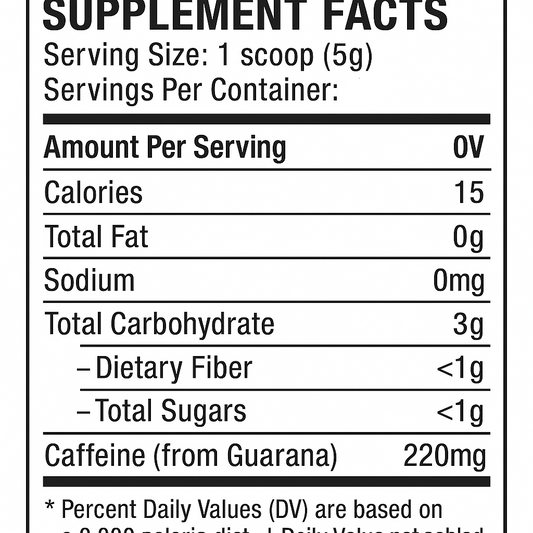
Natural caffeine comes from plants such as guarana, coffee, and tea rather than being made synthetically. Mana Rush uses guarana, one of the most caffeine-dense plants, for about 200 mg of natural caffeine per serving with zero sugar.
How do I use Mana Rush guarana powder?
Mix one scoop into cold water, sparkling water, or a smoothie — it dissolves in about 30 seconds. Use a full glass for steady energy or 60–80 ml for a concentrated shot. Start with one serving per day and adjust to taste and tolerance.
Read next
Featured Mana Rush Guarana powders
Pick a flavor and add to cart directly below, or compare all options first.

Mana Rush Guarana Mango
Regular price
$40.00 USD
Regular price
Sale price
$40.00 USD
⭐ Bestseller · Clean guarana energy · ~40 servings per bag

Mana Rush Guarana Raspberry -Bright Berry Flavor. Clean Natural Energy
Regular price
$40.00 USD
Regular price
Sale price
$40.00 USD
Clean guarana energy · No crash · ~40 servings per bag

Mana Rush Guarana Lime – Natural Zesty Energy Boost
Regular price
$40.00 USD
Regular price
Sale price
$40.00 USD
Clean guarana energy · No crash · ~40 servings per bag