

Why Coffee Makes Some People Crash
Updated: 2026-05-01
Start here
Trying to get away from coffee crashes? Start here
See why some people switch to guaraná for smoother energy, steadier focus, and fewer jitters — then choose a beginner flavor.
Most popular right now — add to cart:

Mana Rush Guarana Lemon – Natural Energy Powder
$40.00

Mana Rush Guarana Mango
$40.00

Mana Rush Guarana Raspberry -Bright Berry Flavor. Clean Natural Energy
$40.00
Why coffee causes an energy crash — the adenosine rebound, fast caffeine absorption, and how to get the same energy without the drop.
Not everyone crashes after coffee, but many people do — particularly after the second or third cup of the day. It's not a personal weakness. It's a predictable physiological response to how coffee's caffeine enters and exits your system.
Take the shortcut:
Guarana vs coffee — full comparison → Natural energy powder guide
The adenosine rebound
Caffeine doesn't create energy. It blocks adenosine receptors — adenosine is a molecule your brain produces continuously while you're awake, and it signals sleep pressure. When coffee's caffeine wears off (4–6 hours), adenosine that has been building up while the receptors were blocked suddenly lands all at once. That surge is the crash.
Fast absorption = harder landing
Coffee's caffeine absorbs quickly — 15–30 minutes to peak. The faster it peaks, the sharper the receptor block, and the more abrupt the rebound. Espresso is faster than drip, which is faster than cold brew. A double espresso on an empty stomach often produces a sharper crash than a long black with food.
Why some people are more sensitive
Caffeine metabolism varies significantly between people based on a CYP1A2 gene variant. Fast metabolizers process caffeine quickly — sharper peaks and crashes. Slow metabolizers feel it longer but with a less pronounced drop. If you reliably crash after coffee, you're likely a faster metabolizer.
The compounding problem
People who crash reach for another coffee. The second pushes the crash later — now into late afternoon or evening. This disrupts sleep. Poor sleep increases adenosine load the next morning, making the first coffee feel less effective, making people reach for more. A reinforcing cycle.
How slow-release caffeine changes this
Guarana's caffeine is bound to plant tannins that slow absorption — 30–45 minute build rather than a fast peak, 3–5 hour hold. The receptor block is less sharp, so the adenosine rebound is gentler. Most guarana users describe the energy fading out rather than dropping. See the full guarana vs coffee breakdown →
Practical next step
See how Mana Rush fits into this: Guarana vs coffee — full comparison → or browse flavors.
Frequently asked questions
Why does coffee make me tired after?
Coffee blocks adenosine receptors that signal tiredness. When coffee wears off, accumulated adenosine floods the receptors all at once — that sudden signal is the crash. Higher doses and faster absorption cause sharper crashes.
How do I stop crashing after coffee?
Reduce dose, delay your first cup 60–90 min after waking, stop by early afternoon, or switch to a slower-release source like guarana that creates a gentler adenosine rebound.
Is guarana better than coffee for avoiding crashes?
For people who regularly crash after coffee, yes. Guarana's slower absorption curve means the receptor block is less sharp and the rebound is more gradual. Most people describe it as energy that fades rather than drops.
Related reading
How to get steady energy without the caffeine crash · Guarana vs coffee · Natural energy powder guide
Mana Rush Guarana
See the difference for yourself
Mana Rush uses guarana caffeine — slower release, no spike, no heavy crash. About $1 per serving vs $3–4 for a canned energy drink.
Frequently asked questions
Is guarana better than coffee for energy?
Many people find guarana energy feels smoother and more sustained than coffee. Guarana releases its caffeine more gradually, which tends to produce a steadier lift with less of the sharp spike-and-crash some people get from coffee. Both contain caffeine, so the right choice depends on how your body responds.
How much caffeine does guarana have compared to coffee?
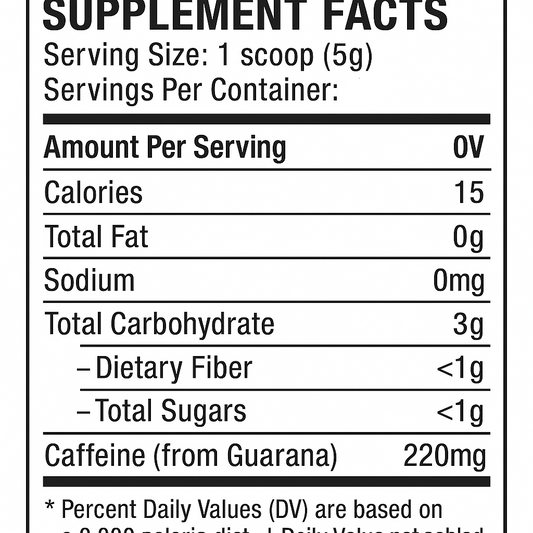
Guarana seeds are one of the most caffeine-dense plants, containing more caffeine by weight than coffee beans. A serving of Mana Rush provides about 200 mg of natural caffeine — comparable to roughly two cups of brewed coffee, but released more slowly.
Does guarana cause jitters or a crash like coffee?
Because guarana caffeine is absorbed more gradually, many people report fewer jitters and a softer comedown than with coffee. Mana Rush also contains zero sugar, which avoids the sugar-driven crash common with sweetened energy drinks.
Can guarana replace my morning coffee?
Yes — one scoop of Mana Rush in cold water can stand in for your morning coffee. Many customers use it as a daily coffee alternative for smoother, longer-lasting energy without the acidity of coffee.
Read next
Featured Mana Rush Guarana powders
Pick a flavor and add to cart directly below, or compare all options first.

Mana Rush Guarana Mango
Regular price
$40.00 USD
Regular price
Sale price
$40.00 USD
⭐ Bestseller · Clean guarana energy · ~40 servings per bag

Mana Rush Guarana Raspberry -Bright Berry Flavor. Clean Natural Energy
Regular price
$40.00 USD
Regular price
Sale price
$40.00 USD
Clean guarana energy · No crash · ~40 servings per bag

Mana Rush Guarana Lime – Natural Zesty Energy Boost
Regular price
$40.00 USD
Regular price
Sale price
$40.00 USD
Clean guarana energy · No crash · ~40 servings per bag