
Natural Caffeine vs Synthetic Caffeine: What's Actually Different?
Updated: 2026-05-24
Start here
New to Mana Rush? Start with the guide that fits your goal
If you are comparing coffee alternatives, natural energy powder, and smoother caffeine routines, these are the best next steps.
Most popular right now — add to cart:

Mana Rush Guarana Lemon – Natural Energy Powder
$40.00

Mana Rush Guarana Mango
$40.00

Mana Rush Guarana Raspberry -Bright Berry Flavor. Clean Natural Energy
$40.00
Natural caffeine vs synthetic caffeine — what's actually different, how each one feels, and which is better for daily energy use.
Every energy drink contains caffeine. Not all caffeine is the same. The difference between natural and synthetic caffeine isn't just marketing — it's a real pharmacokinetic difference that explains why some people feel fine on coffee but jittery and crashed after a Red Bull.
They're chemically identical — but that's not the whole story
At the molecular level, caffeine (1,3,7-trimethylxanthine) is the same compound whether extracted from guarana or synthesised in a lab. What's different is the delivery context.
Synthetic caffeine: alone and fast
Caffeine anhydrous is isolated, pure caffeine — removed from its plant matrix, dried into powder. It absorbs in 15–30 minutes. This speed creates the sharp peak. With no moderating compounds, the receptor block is rapid and complete, and when it wears off, it does so all at once.
Natural caffeine: surrounded and slowed
Guarana's caffeine is bound to tannins and plant fibers. Green tea's caffeine is accompanied by L-theanine, which reduces anxiety. Coffee's caffeine comes with chlorogenic acids and hundreds of other compounds. These change how quickly the caffeine enters the bloodstream — and how abruptly it leaves.
What this means in practice
Synthetic caffeine: peaks in 30 minutes, lasts 2–3 hours, sharper crash. Guarana caffeine: builds in 30–45 minutes, lasts 3–5 hours, gentler tail. Green tea/matcha caffeine: builds in 30–60 minutes, lasts 3–4 hours, calmest effect due to L-theanine.
Which is better for daily use?
For people using caffeine daily over years, slower-release natural sources are generally easier to sustain. The dependency cycle is less severe because the peaks are less sharp. See how Mana Rush uses guarana for clean daily energy →
Practical next step
See how Mana Rush fits into this: Natural energy powder guide → or browse flavors.
Frequently asked questions
Is natural caffeine better than synthetic?
For most daily users, yes. Natural caffeine from plant sources releases more slowly, causes fewer jitters, and produces a gentler crash. The molecules are identical but the delivery context changes how they feel.
What has natural caffeine in it?
Coffee, tea, guarana, matcha, yerba mate, and cacao all naturally contain caffeine. Guarana has the highest caffeine concentration by weight of any natural source.
Is caffeine anhydrous bad for you?
Not inherently, but its fast absorption makes it easier to overconsume and more likely to cause jitters and a hard crash. At controlled doses it's safe, but the same dose from a natural source typically feels better.
Related reading
What is clean caffeine? · Why coffee makes some people crash · Natural energy powder guide
Mana Rush Guarana
See the difference for yourself
Mana Rush uses guarana caffeine — slower release, no spike, no heavy crash. About $1 per serving vs $3–4 for a canned energy drink.
Frequently asked questions
Is guarana better than coffee for energy?
Many people find guarana energy feels smoother and more sustained than coffee. Guarana releases its caffeine more gradually, which tends to produce a steadier lift with less of the sharp spike-and-crash some people get from coffee. Both contain caffeine, so the right choice depends on how your body responds.
How much caffeine does guarana have compared to coffee?
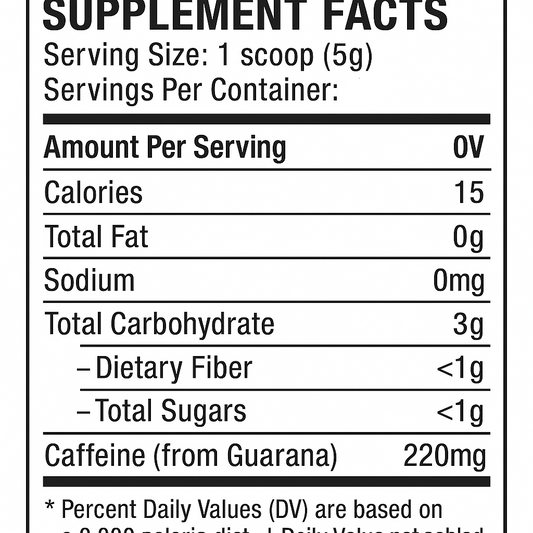
Guarana seeds are one of the most caffeine-dense plants, containing more caffeine by weight than coffee beans. A serving of Mana Rush provides about 200 mg of natural caffeine — comparable to roughly two cups of brewed coffee, but released more slowly.
Does guarana cause jitters or a crash like coffee?
Because guarana caffeine is absorbed more gradually, many people report fewer jitters and a softer comedown than with coffee. Mana Rush also contains zero sugar, which avoids the sugar-driven crash common with sweetened energy drinks.
Can guarana replace my morning coffee?
Yes — one scoop of Mana Rush in cold water can stand in for your morning coffee. Many customers use it as a daily coffee alternative for smoother, longer-lasting energy without the acidity of coffee.
Read next
Featured Mana Rush Guarana powders
Pick a flavor and add to cart directly below, or compare all options first.

Mana Rush Guarana Mango
Regular price
$40.00 USD
Regular price
Sale price
$40.00 USD
⭐ Bestseller · Clean guarana energy · ~40 servings per bag

Mana Rush Guarana Raspberry -Bright Berry Flavor. Clean Natural Energy
Regular price
$40.00 USD
Regular price
Sale price
$40.00 USD
Clean guarana energy · No crash · ~40 servings per bag

Mana Rush Guarana Lime – Natural Zesty Energy Boost
Regular price
$40.00 USD
Regular price
Sale price
$40.00 USD
Clean guarana energy · No crash · ~40 servings per bag