

HOW MUCH WATER IS IDEAL
Updated: 2025-09-07
Start here
New to Mana Rush? Start with the guide that fits your goal
If you are comparing coffee alternatives, natural energy powder, and smoother caffeine routines, these are the best next steps.
8 GLASSES OR BUST?
HOW MUCH WATER SHOULD YOU DRINK? AN EXERCISE SCIENTIST REVEALS THE IDEAL AMOUNT
Do you really need eight glasses of water — or about two liters — a day to stay healthy?
THE WARMER WEATHER AND LONGER DAYS have inspired reminders to “stay hydrated” and drink eight glasses of water — or about two liters — a day.
Not to burst anyone’s water bottle, but healthy people can actually die from drinking too much water. I am an exercise physiologist, and my research focuses on overhydration and how drinking too much water affects the body. Since water — and sodium — balance is essential to life, it is extremely rare for people to die from drinking too much — or too little — fluid. In most cases, your body’s finely tuned molecular processes are unconsciously taking care of you.

HOW MUCH WATER DO YOU NEED?
As spring unfolds, hydration challenges take root across schools, sports, and workplaces. These heavily marketed hydration challenges serve to cultivate both camaraderie and friendly competition to ensure that we drink compulsory amounts of water throughout the day.
Hydration and “Gallon Challenges” support the widely held belief that water consumption beyond physiological need — or thirst — is healthy.
But this is not so. Individual body-water needs — intake — are primarily based upon how much water people lose. How much much water each person needs to drink mainly depends on three factors:
- Bodyweight: Bigger people need more water.
- Environmental temperature: When it’s hotter, people sweat and lose water.
- Physical activity levels: Increased exercise intensity increases sweat water losses.
Therefore, a “one size fits all” fluid replacement strategy, such as drinking eight glasses of eight ounces of water per day, is inappropriate for everyone.
It remains unclear where the “8 x 8” water intake recommendation comes from. Perhaps, this two-liter intake threshold is derived from a misinterpretation of original recommendations offered by the U.S. Food and Nutrition Board in 1945 as well as the 2017 European Food Safety Authority, which states the daily recommended amount of water includes all beverages plus the moisture contained in foods.
This means that the moisture contained in foods, especially fresh fruits, sodas, juices, soups, milk, coffee, and, yes, even beer, contributes to this daily recommended water requirement. These guidelines go on to suggest that most of the recommended water content can be accomplished without drinking additional cups of plain water.
And, it is important to note that while alcohol has diuretic properties — ethanol acts directly on the kidneys to make us pee more — caffeinated beverages, like tea and coffee, do not increase urinary water losses above the amount of water contained in these beverages.
CAN YOU DRINK TOO MUCH WATER?
Now, you may be wondering why this is so. After all, you’ve heard from a lot of people that you need to drink more, more, more.
Because total body water balance, or what we exercise scientists call homeostasis, is complicated, mammals survive by making real-time adjustments at the kidney. That’s why when it comes to hydration, our kidneys are king.
Within each kidney — we need only one (i.e., we are born with a spare, just in case) — is an undercover network of aquaporin-2 (AQP-2) water channels that respond to a hormone called arginine vasopressin. This is the body’s main anti-diuretic (water retention) hormone. It is secreted by the posterior pituitary gland in response to nerve signals sent from specialized brain sensors which detect subtle changes in water balance. These specialized sensors are called circumventricular organs.
The kidneys will make molecular adjustments to both underhydration and overhydration within 40 seconds in response to an upset in the water balance. These adjustments result from the mobilization armies of AQP-2 water channels, numbering about 12 million per collecting duct cell.
This is why when we drink more water than our body needs — above thirst — we immediately have to pee out any excess water. Or when we forget our water bottle during practice, we stop peeing to conserve body water. This quick coordinated action between the brain, cranial nerves, and kidneys is far more efficient and precise than any phone app, gadget, or personalized recommendation available.
HOW MUCH WATER IS IDEAL?
Data suggests that drinking about two liters of water per day reduces kidney stone formation in people with a history of kidney stones and decreases the number of bladder infections in people with a history of bladder infections.
Improvement in skin complexion, kidney function, and constipation, with increased water consumption, are not clearly supported by science. Drinking extra water alone does not help kids lose weight unless water intake replaces the ingestion of higher-caloric beverages, such as soda, or makes people feel “full” before meals.
Drinking water can affect some people’s mental state. Some studies report better cognitive performance after increasing water intake; while females with anxiety report compulsive water intake make them feel better, likely from activation of reward circuits that increase dopamine. Many schizophrenic patients are compulsive water drinkers, stating that “voices” tell them to drink and that drinking water suppresses these voices.
Of note, brain imaging studies confirm that superfluous drinking is unpleasant and requires greater muscular effort than drinking when thirsty. Our brain tries to discourage chronic overdrinking, or polydipsia, because “social polydipsia” causes chronic peeing (polyuria), which can lead to internal plumbing modifications such as bladder distention, ureter dilation, hydronephrosis, and renal failure.
So, do you need to drink eight glasses of water per day? Unless you are thirsty, drinking extra water will probably not offer superior health benefits but probably is not harmful either. However, if kidneys could talk, they would say that hydration challenges represent nothing more than highly marketed peeing contests.
This article was originally published on The Conversation by Tamara Hew-Butler at UCL. Read the original article here.
Frequently asked questions
What is guarana?
Guarana is a plant native to the Amazon whose seeds are one of the richest natural sources of caffeine. It has been used for centuries as a natural energy source and is valued for delivering a smoother, slower-release lift than coffee.
Is guarana better than coffee for energy?
Many people find guarana energy feels smoother and steadier than coffee because its caffeine releases more gradually, with less of a spike and crash. Both contain caffeine, so it comes down to how your body responds.
How long does guarana stay in your system?
Caffeine from guarana has a half-life of about 4–6 hours in most adults, so the effect tapers off over the hours after a serving. Metabolism, body weight, and caffeine sensitivity all influence how long you feel it.
What is natural or plant-based caffeine?
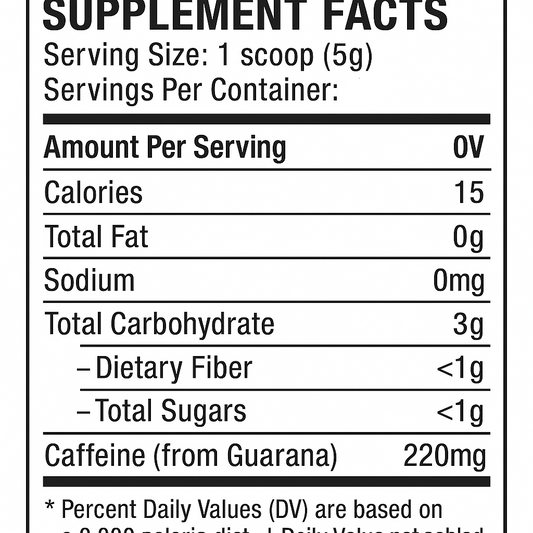
Natural caffeine comes from plants such as guarana, coffee, and tea rather than being made synthetically. Mana Rush uses guarana, one of the most caffeine-dense plants, for about 200 mg of natural caffeine per serving with zero sugar.
How do I use Mana Rush guarana powder?
Mix one scoop into cold water, sparkling water, or a smoothie — it dissolves in about 30 seconds. Use a full glass for steady energy or 60–80 ml for a concentrated shot. Start with one serving per day and adjust to taste and tolerance.
Read next
Featured Mana Rush Guarana powders
Pick a flavor and add to cart directly below, or compare all options first.

Mana Rush Guarana Mango
Regular price
$40.00 USD
Regular price
Sale price
$40.00 USD
⭐ Bestseller · Clean guarana energy · ~40 servings per bag

Mana Rush Guarana Raspberry -Bright Berry Flavor. Clean Natural Energy
Regular price
$40.00 USD
Regular price
Sale price
$40.00 USD
Clean guarana energy · No crash · ~40 servings per bag

Mana Rush Guarana Lime – Natural Zesty Energy Boost
Regular price
$40.00 USD
Regular price
Sale price
$40.00 USD
Clean guarana energy · No crash · ~40 servings per bag